
Children's Voices Centre
Children's Voices Centre
Working together for a better world for children
Our Children’s Advisory Group brings together children aged 5–15 who share their ideas, experiences and creativity to help shape the work of the Children’s Voices Centre.
Members contribute to research, explore issues that matter to children and help create opportunities for other children’s voices to be heard.
With support from the Centre, the group has shared the perspectives of almost 150 children from 18 countries with the United Nations, the World Health Organization and audiences at national and international conferences.
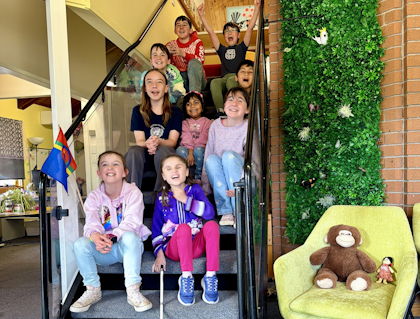
This World Children's Day, the Children's Voices Centre at Charles Sturt University is proud to join UNICEF Australia's A Minute of Loudness campaign, celebrating children's rights, particularly children's right to be healthy, and encouraging children across Australia to speak up about the issues that matter most to them.
To mark the occasion, we're delighted to share a video co-created by the Children's Voices Centre's Children's Advisory Group and Dr Kaloyan Kamenov, Technical Lead for Disability at the World Health Organization (WHO), highlighting why children's voices must be central to decisions about their health and wellbeing. In this video, the children interview Dr Kamenov about key issues they want to raise about children's right to be healthy.
A transcript may be available on YouTube by using the Watch on YouTube link.

Children Ask, World Health Organization Answers: A Conversation About Health with Dr Kaloyan Kamenov
8 minutes, 59 seconds
Dr Kaloyan Kamenov, Technical Lead of the Disability Programme at the World Health Organization (WHO), answers questions from members of the Children's Advisory Group at Charles Sturt University's Children's Voices Centre. Through their questions, children explore the role of WHO, health and healthcare, and why children's voices and experiences matter in shaping a healthier, more inclusive world. The Children's Advisory Group brings together children who share their ideas, experiences and perspectives to help inform research and decision-making on issues that affect their lives. Find out more about the Children's Voices Centre: https://www.csu.edu.au/research/childrens-voices-centre TEQSA Provider Identification: PRV12018 (Australian University). CRICOS Provider: 00005F.

COSP-19 WHO CVC Children's Advisory Group Children Draw Health
7 minutes, 16 seconds
Created by the Children’s Voices Centre (CVC) Children’s Advisory Group, this video shares children’s perspectives from the Children Draw Health project. It was presented at the World Health Organization Disability Health Equity Network side event at COSP19, the 19th Session of the Conference of States Parties to the Convention on the Rights of Persons with Disabilities.
Alongside sharing children’s perspectives with wider audiences, members help shape how our research is developed and carried out. The group’s activities grow from children’s own ideas, research projects and invitations to contribute.
For example, members helped develop Children Draw|Create|Share Belonging, shaping the theme, the ways children could participate, the questions we would ask and the materials inviting contributions from children around the world. They will also be invited to help explore the contributions and share the findings.
Through this work, members contribute their own perspectives while helping create opportunities for other children to express what matters to them.
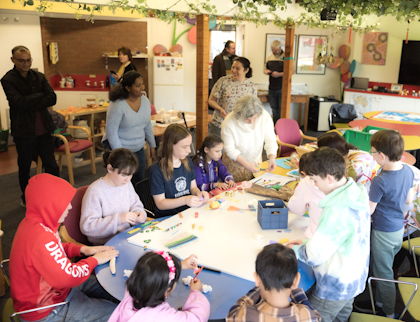
Every child has the right to express their views and have those views taken seriously.
Our approach is guided by the United Nations Convention on the Rights of the Child and Laura Lundy’s participation framework (PDF):
We are also open with children about what we can achieve together and the limits of our influence.
The group meets online one Friday each month. Children take turns volunteering to chair meetings, with support from the Centre, and participate in ways that feel comfortable and meaningful to them.
Members may also choose to contribute to additional projects through artwork, spoken or written words, or video messages. We aim to offer optional in-person gatherings once or twice a year, providing opportunities to work creatively together.
We work with children and families to make activities as accessible and inclusive as possible. Attendance at in-person gatherings is optional, and travel costs are not currently funded.
Participation is voluntary. Families provide permission for children to take part, and children always have a choice about whether and how they participate.
Members do not need to join every activity and can leave the group at any time. Appropriate permissions are sought for research participation and for photography, video and audio recordings.
To ask a question or enquire about membership, please contact us.