
Sustainability
- Home
- Locations
- What you can do
- LiFE Framework
- Sustainable Development Goals
- About us
- Grants
- Events
- Contact us
Now searching for:
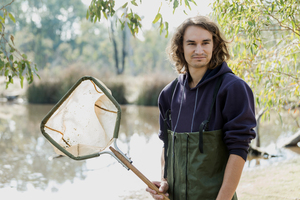
Protecting aquatic ecosystems requires understanding real-world environmental challenges as well as theory. Students pursuing environmental science and fisheries pathways need opportunities to work directly in rivers, estuaries and aquatic laboratories to build skills in fish conservation, habitat assessment and waterway management.
Charles Sturt provides these opportunities by embedding students in active aquatic research and conservation projects. Students conduct field-based fish sampling and laboratory analysis through subjects such as Fish Ecology and Conservation and contribute to applied research led by the Gulbali Institute and Inland Fisheries Research Group. This provides students with direct experience with contemporary conservation and research practices.
By integrating student learning with real research, Charles Sturt builds graduate capability that supports long-term health and resilience in aquatic environments.
Find out more about
Aquatic conservation