Sustainability
- Home
- Locations
- What you can do
- LiFE Framework
- Sustainable Development Goals
- About us
- Grants
- Events
- Contact us
All business, industry and communities share legal and social responsibilities to promote and protect human health and the environment. We do this by safely, responsibly and efficiently managing and reducing waste, maximising waste reuse, recycling, and finding opportunities to generate resources.
As a large organisation, we deal with staff, student, visitor and supplier waste. This means Charles Sturt University contends with a host of operational waste issues, not least the increasing costs of disposal charges and landfill taxes, but also the possible future requirement to measure and report scope 3 carbon emissions relating to waste through the National Greenhouse and Energy Reporting Scheme (NGERS).
There are increasingly stringent legal requirements for handling and disposing of our waste safely and efficiently. By meeting these requirements, Charles Sturt University avoids enforcement action, but may also cut costs or save money.
Many legislative requirements apply to all institutional waste, while some apply only to specific types of waste.
Benefits of implementing a successful resource and waste management strategy include:
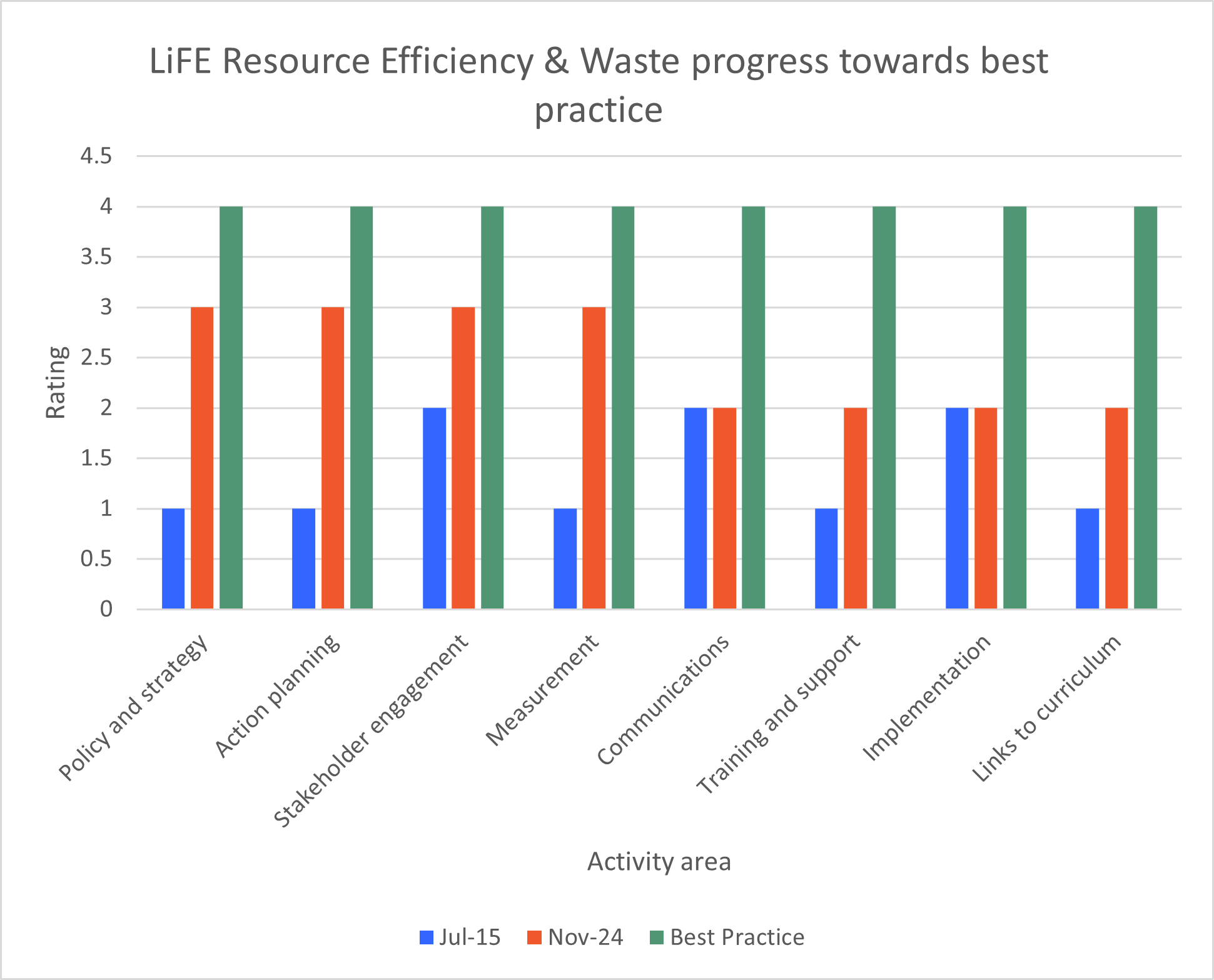
This framework was benchmarked in 2015. The below graph illustrates our progress towards best practice across the eight (8) activity areas. The green bars reaching four (4) highlight best practice and the lower bars in blue indicate Charles Sturt University’s current baseline ratings.
Charles Sturt University has established monitoring and reporting requirements to ensure waste generated across its operations is measured, reviewed and managed responsibly. Under the University's waste management contracts, service providers are required to provide detailed monthly reporting on the quantities of waste sent to landfill and materials recovered through recycling streams. This data is used to monitor waste generation trends, evaluate the effectiveness of waste reduction initiatives, and identify opportunities to improve resource recovery outcomes. Waste and recycling data is also analysed annually to support the University's participation in sector benchmarking programs and the voluntary reporting of Scope 3 greenhouse gas emissions.
The University's waste measurement and reporting requirements extend to capital works and infrastructure projects, with building and construction contractors required to report on the quantities of waste generated, recycled and diverted from landfill during construction activities.
To further improve waste management performance, regular audits are undertaken by cleaning and facilities staff to identify contamination in recycling streams and recyclable materials incorrectly disposed of in general waste bins. Findings from these audits inform targeted education and operational improvements that support higher recycling rates and reduced waste to landfill across Charles Sturt campuses.

Did you know contaminating recycling means that often the whole bin ends up going to landfill?
By knowing what goes where
you can increase the amount of resources we recover through the recycling system.
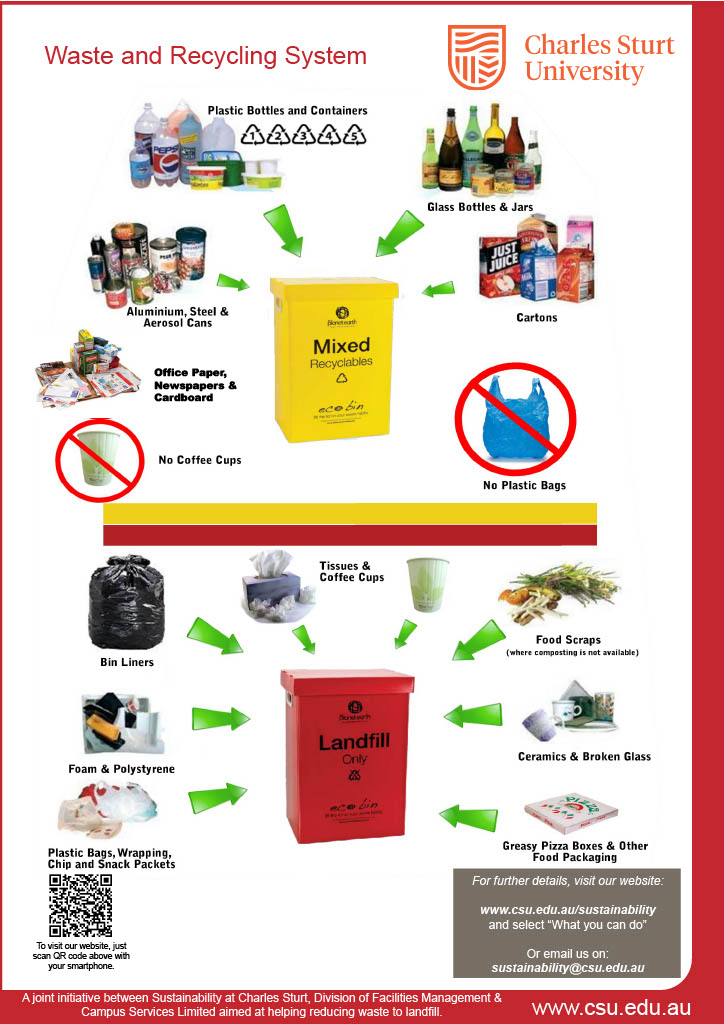
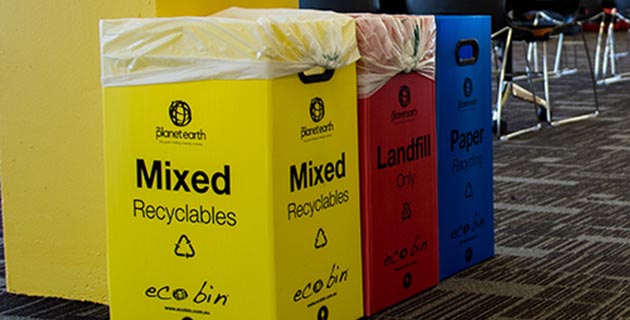
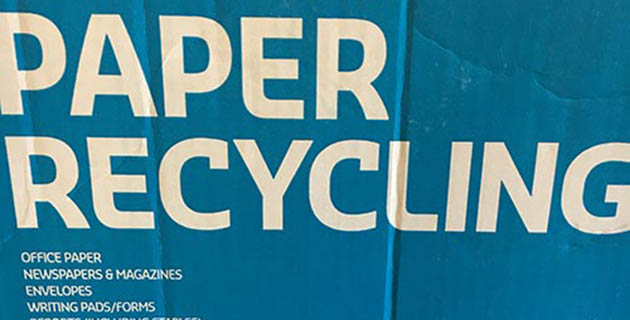
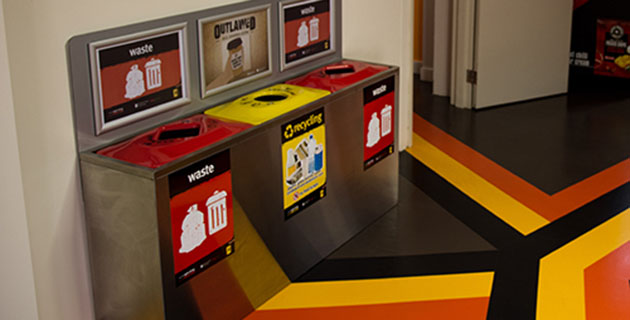
You can reduce waste on campus and in your office by using the co-mingled (yellow) and paper (blue) bins provided.
If you require a new or replacement bin, you can raise a Facilities Maintenance Request or contact your office administrator to raise on your behalf.
Charles Sturt University aligns our research, policies, procedures, and other work with the UN Sustainable Development Goals (SDGs). These are the most relevant SDGs for this initiative.