18 December 2025
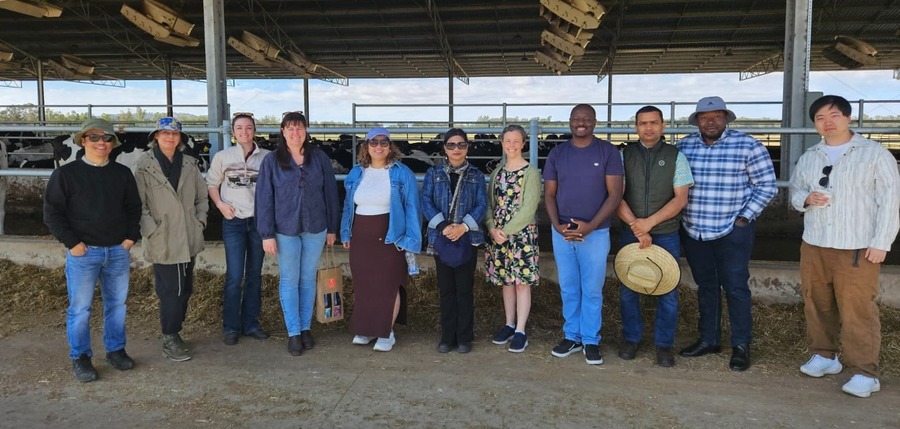
We have recently wrapped up the 2025 Emerging Researchers Network (ERN), a program designed to support early career researchers working on drought and climate resilience across southern NSW.
At its core, the ERN focuses on strengthening the connection between research and practice. Participants build skills in extension, adoption and co-design, while working directly with industry to better understand what is actually needed on the ground. A key part of the program is pairing each researcher with industry contacts, creating space for two-way learning and helping shape research that is relevant, timely and usable beyond academia.
Through the program, the Hub has facilitated meaningful industry connections that are already extending beyond the life of the ERN, including links with regulators, other drought hubs and sector leaders. These relationships help researchers test ideas, refine their thinking and build confidence engaging with industry, policy and community stakeholders.
Speaking at the ERN graduation session, Hub Knowledge Broker Pip Job said the program was a deliberate investment in future leaders who can drive resilience beyond the life of individual research projects.
“The Hub exists to strengthen drought and climate resilience by bridging research and practical application,” Pip said. “By embedding extension and adoption thinking into your work, we know the research you do will have greater impact. We’ve invested in you not only for the research itself, but for the role you can play in accelerating innovation into the future.”
The program also exposed participants to industry perspectives and regional contexts, creating pathways for researchers to connect their work directly to the needs of regional communities and agricultural systems.
Feedback from participants highlighted the value of this approach, with the program receiving an average rating of 9.7 out of 10. Many researchers reflected on the importance of learning how to communicate science more effectively, reconsidering the resilience of their research under climate stress, and gaining new perspectives through sessions on long-term field trials and First Nations knowledge.
PhD candidate Pradeep Rai from Charles Sturt University said the program reshaped how he thinks about sustainability and research partnerships.
“Hearing from the Hub’s Karen Kime about First Nations culture made me reflect on the overlap with how in Bhutan we prioritise wellbeing and happiness, balancing spiritual, material and ecological needs,” Pradeep said. “It’s influenced how I’d like to approach future research into regenerative and sustainable agriculture.”
The Hub also acknowledged that learning flowed both ways. Participant feedback played a key role in refining the program and strengthening how the Hub supports the integration of extension, adoption and resilience thinking within the research sector.
As the 2025 cohort graduates, the Emerging Researchers Network leaves behind a connected group of researchers equipped to translate strong science into meaningful, long-term outcomes for regional communities.