28 September 2026
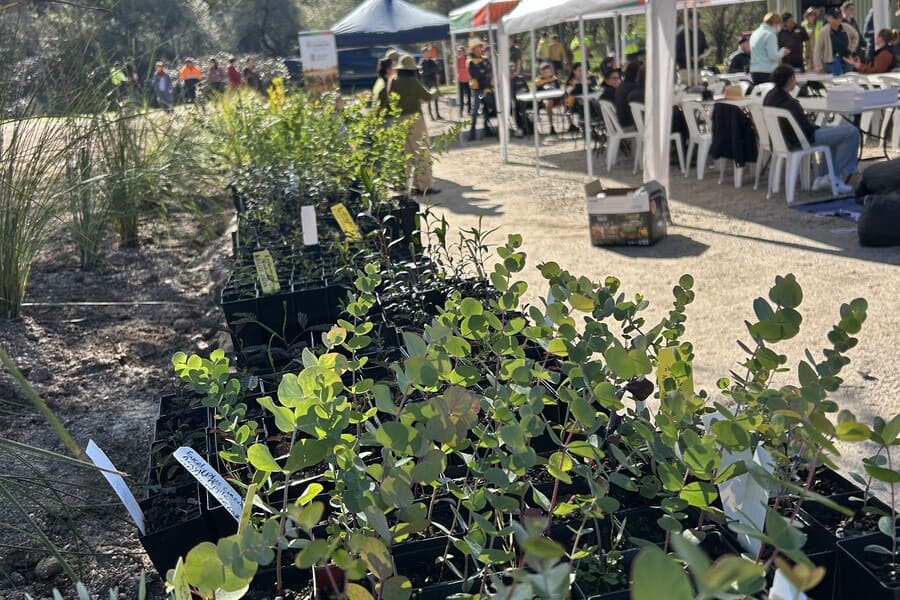
Around 50 people gathered on Wiradjuri Country in Bathurst earlier this month for a Native Grains Workshop exploring the connections between cultural knowledge, native food systems, land management and drought resilience.
Funded by the Hub and delivered in partnership with Bathurst Local Aboriginal Land Council, the workshop was actively supported by Central West Local Land Services, which is working with Bathurst LALC on the ongoing development of the site.
The day brought together Aboriginal community members and Elders, young people, landholders, educators, researchers and land management practitioners for practical, on-Country learning.
Facilitators from Indigiearth, the University of Canberra and the National Seed Bank delivered the workshop around two-way learning, combining Aboriginal cultural knowledge with expertise in seed conservation and contemporary land management. Participants explored native grain identification, seed collection and propagation, traditional harvesting and milling, bush foods, biodiversity and the role native species can play in building more resilient landscapes.
For Hub Program Manager Laura Hassan, who supported the project through its development and attended on the day, it was the combination of perspectives that made the workshop particularly valuable.
“It was really interactive, with lots of listening, sharing and learning from one another”.” Laura said.
The workshop also connected directly with the syntropic farming work being led by Bathurst LALC and Central West Local Land Services (LLS) at the site. Native grains such as kangaroo grass and native millet are being explored as part of a broader approach to regenerative, culturally informed land management, with potential benefits for biodiversity, ground cover and drought resilience.
Bathurst LALC CEO Toni-Lee Scott has been a key driver of that vision, alongside partners from Central West LLS, helping bring together the people, knowledge and practical work needed to create a place where cultural practices and contemporary land management can sit alongside one another.
The day also created space for the stories behind the plants. Participants heard about traditional food practices, milling and gathering, intergenerational knowledge transfer and the experiences of First Nations people working to keep native foods and cultural knowledge alive.
“It was running at all these different levels, from biodiversity and propagation and restoration through to culture and recognition,” Laura said.
There were already signs the ideas could travel beyond Bathurst, with Laura hearing participants from other communities looking around the site and saying, “We could do this.”
For Laura, the experience was also a reminder of the value of creating spaces where people can listen and learn from one another.
“It was a humbling and empowering day. I felt very privileged to hear those stories and learn from both the facilitators and the incredibly knowledgeable people in the room,” she said.
“It’s the kind of work I’d be very keen to see the Hub support more of.”