28 September 2026
On the NSW South Coast, some of the most effective drought and climate resilience work starts with something simple: knowing the people, understanding the local context and creating the right connections.
That has been a strong thread through our work in the region, where locally embedded roles have helped connect farmers, landholders and community organisations with knowledge, networks and opportunities that respond to what matters locally.
For former Knowledge Broker Chloe Wilson, those relationships were central to the role. Working through Bega Circular Valley, Chloe engaged across a diverse agricultural landscape that includes beef, dairy, horticulture, aquaculture and viticulture. Rather than applying a one-size-fits-all approach, the focus was on listening to producers, identifying shared priorities and helping shape activities around the realities of the region.
That approach has led to outcomes that extend well beyond individual workshops or projects. Farmer networks have been strengthened, producers have had more opportunities to learn from each other and from technical experts, and conversations about soil health, regenerative farming, food systems and resilience have connected people who may not otherwise have crossed paths.
The common thread is collaboration. By bringing together existing knowledge, local experience and the right organisations, the Hub has been able to help turn ideas into practical activity while strengthening the networks that remain in place long after an individual event or project finishes.
This work is now continuing through Luke Peel, Agricultural Resilience Officer at Bega Circular Valley, who is building on those foundations and supporting landholders to put practical resilience solutions into action.
As Luke describes it, there is already a strong appetite across agricultural sectors to work together. Often, the solutions themselves are not the missing piece. The opportunity lies in connecting people with those solutions, adapting them to local conditions and helping put them into practice.
That continuity matters. Strong regional resilience is rarely built through a single intervention. It grows through trusted relationships, repeated opportunities to connect and learn, and local capability that continues to strengthen over time.
Three recently published South Coast case studies capture different examples of this work in practice. Explore them here:
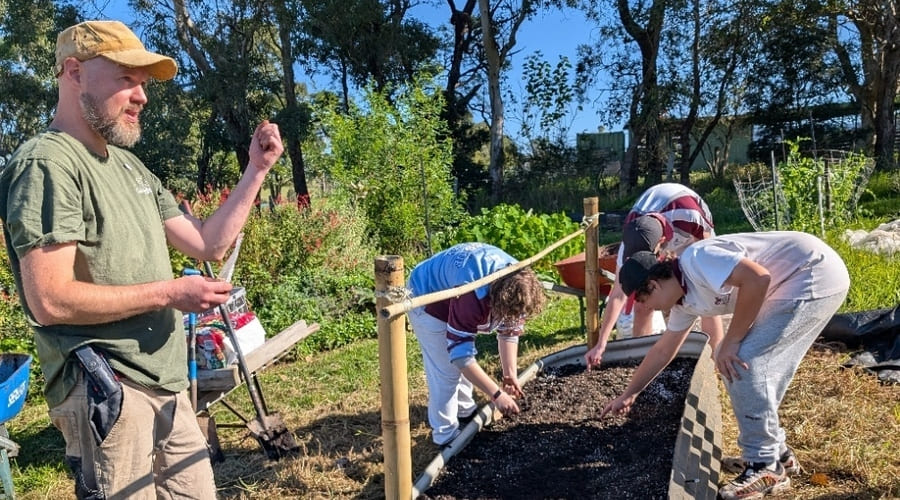
Students and facilitator at a taster day event. Image credit: Growing Together South Coast